In Italy, Good Food Is Not a Luxury
Why Eating Well and Eating Affordably in Italy Go Together
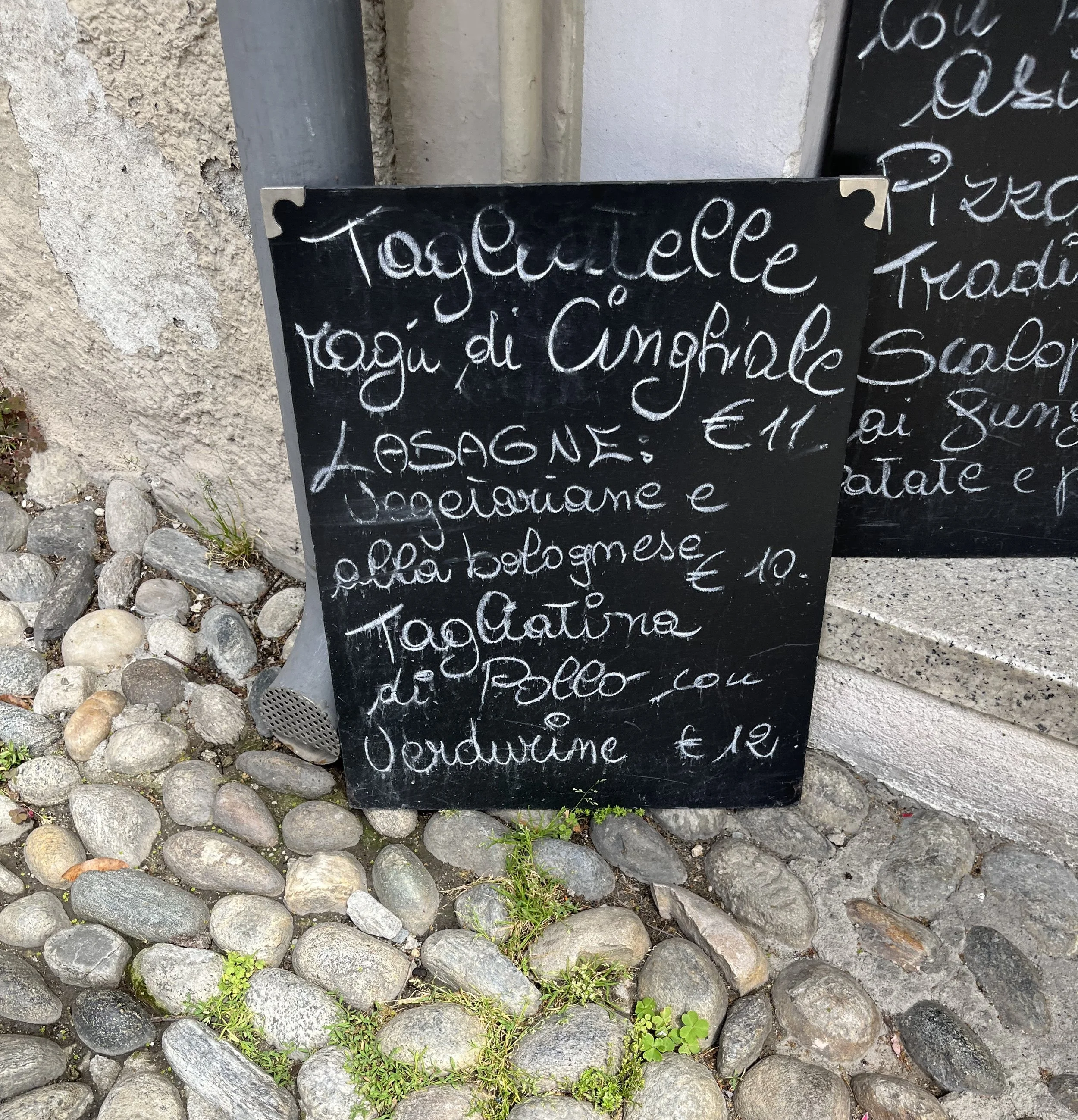
One can eat very well in Italy without spending a lot of money. If you find yourself in a higher-end restaurant, you will likely be somewhere between disappointed and underwhelmed. At the very least, you’ll think, “That was fine, but we would have been just as happy at the modest osteria down the street and spent a fraction of the money.” The worst meals we have had in Italy have generally been the most expensive ones, not just in tourist traps, but in higher-end places catering to Italians seeking something "complex" and "innovative.”
The relationship between food quality and price in Italy is distinctive from the American experience. Food culture in the US reflects the problems of American life. People pressed for time and money eat what is fast and available, and the food industry has spent decades engineering products to fill that space. The result is a baseline that most Americans don't even recognize as poor until they eat somewhere where it isn’t. In the US, even a restaurant meal often means something processed, and the "healthy option" is salad from a bag.
In Italy, for reasons that have to do with the country’s geography and social history, quality food is simply expected. It is not a luxury. It is not just something for those with deep pockets. A neighborhood bar at which everyone stops for their morning coffee has to have something decent. It may be better or worse, truly excellent or just fine, and Italians will have their favorites and preferences. But it will never be bad. What we like to call Italy’s “coffee moral economy” means that your espresso or cappuccino will be in the range of $1.25 to $1.60 (sometimes a bit less or more depending on the venue and location).
A light lunch in Italy — a sandwich with fresh bread and some combination of vegetables, cured meat, cheese at a local place — runs about $3 to $5. House wine, generally of decent to excellent quality, will be about $7 to $10 a liter. A dinner that would feel “special occasion” by American standards can be had for $50 to $100 for two.
And unlike in the US, if you add up the prices you see on the menu, that is the total you will see on your bill. In Italy, service is included and tipping is not expected. Waitstaff are professionals, and you pay a cover charge (listed on your bill) for the table. You will not be pushed out the door for the next tipping customer. On rare occasions in recent years, we have seen American tourists pressed for a tip, but this is not part of Italian dining culture.
The culture and economy that makes all of this possible has come under some pressure as tourism has surged. Italy set an all-time record for tourist arrivals in 2023, with more than 134 million visitors and over 450 million overnight stays — surpassing pre-pandemic levels for the first time. In the most heavily visited city centers, this pressure shows itself at the table. A Roman friend recently complained to us about "the restaurants for the tourist that use a microwave.” Near the most iconic sights in Rome, Florence, and Venice in particular, some vigilance is warranted.
But the reality is that you will find yourself in the center of Rome and in need of lunch and you will eat at a touristy restaurant. One cannot be a tourist and at the same time not be a tourist. And even in crowded centers, there are excellent eateries, albeit more expensive, as proprietors too have to pay their rent, pay their employees, and maintain their establishments in city centers.
Italy Within Reach’s planning services offer clients detailed guidance tailored to their itinerary on where and how to eat well.
How to Eat Well and Affordably in Italy
-
Good restaurants are everywhere in Italy, but location matters. The easiest way to eat better for less is simply to move beyond the tourist center. Italian cities are made for walking, and a pleasant stroll—or a short trip by metro, tram, or bus—often leads to neighborhood restaurants serving local residents rather than visitors.
A Roman friend of ours recently remarked, rather bluntly, "The center is very expensive, and they cook with microwaves." While that's certainly an exaggeration, there is a point behind it. Restaurants in the busiest tourist districts often charge more while offering a less memorable experience than those just a little farther away.
Many restaurants accept reservations online, and booking ahead—particularly on Friday and Saturday evenings—is often advisable.
Finally, don't feel obligated to order the full four-course meal every time. It is one of Italy's great culinary traditions and absolutely worth experiencing, but enjoying it every day quickly becomes both expensive and exhausting. Some days, a simple neighborhood trattoria or pizza is exactly the right choice.
-
Not bars in the American sense, but the neighborhood cafe that doubles as a quick-meal spot. Every Italian passes through one in the morning. Fresh sandwiches, pastries, coffee, sometimes a hot dish at lunch, an aperitivo and wine in the evening, an after-dinner drink. A few euros, always.
-
A margherita pizza at a neighborhood place runs around five to seven euros. Even in cities, even near the crowds, pizza, of which there are many wonderful variants, is an affordable option. It can often be found on restaurant menus, not just pizzerias.
Italian pizzas are not the doughy bread bomb we are used in the US. They are light. We think Roman pizza, with its cracker thin crust, is the best.
-
Prepared-food shops where a complete meal costs very little and was made that day. What they offer varies regionally. The Roman version often features roasted meats, supplì, and fresh greens. They are inexpensive and a great option for an easy dinner at your lodging, although they do close around 8:00 p.m., so you want to bear that it in mind if the rosticceria is your evening plan.
-
These specialize in cured meats, and will typically carry specialty cheeses, bread, and local products. Many will put together a sandwich for you on the spot for a few euros. Or you can order some items to take home and make yourself a charcutterie board.
-
Alimentari are small neighborhood grocery stores. They sell all the basics, and given that the basis in Italy are of a generally high quality, you can easily find what you need at them to make an inexpensive, lovely meal. Even the larger chains, which carry mass-market products, are competing with local establishments and typically have deli sections where you can get something tasty for lunch or dinner at very little cost.
-
Neighborhood fruit and vegetable stands selling produce at its seasonal best. A peach that tastes like a peach. Tomatoes that are ripe, fragrant, and meant to be eaten fresh. The quality is remarkably high, and the prices are remarkably low. It is a small everyday reminder that some of Italy's greatest pleasures are also its simplest.
When planning a trip, it is essential to consider whether your lodging makes dining away from the tourist-trap restaurant possible. A small refrigerator, a nearby market, or even a pleasant terrace can transform simple local ingredients into a lovely evening.
Italy Within Reach advises its clients on where and how to dine in Italy so as to enjoy the country’s cuisine simply and beautifully.
Learn more about our services.