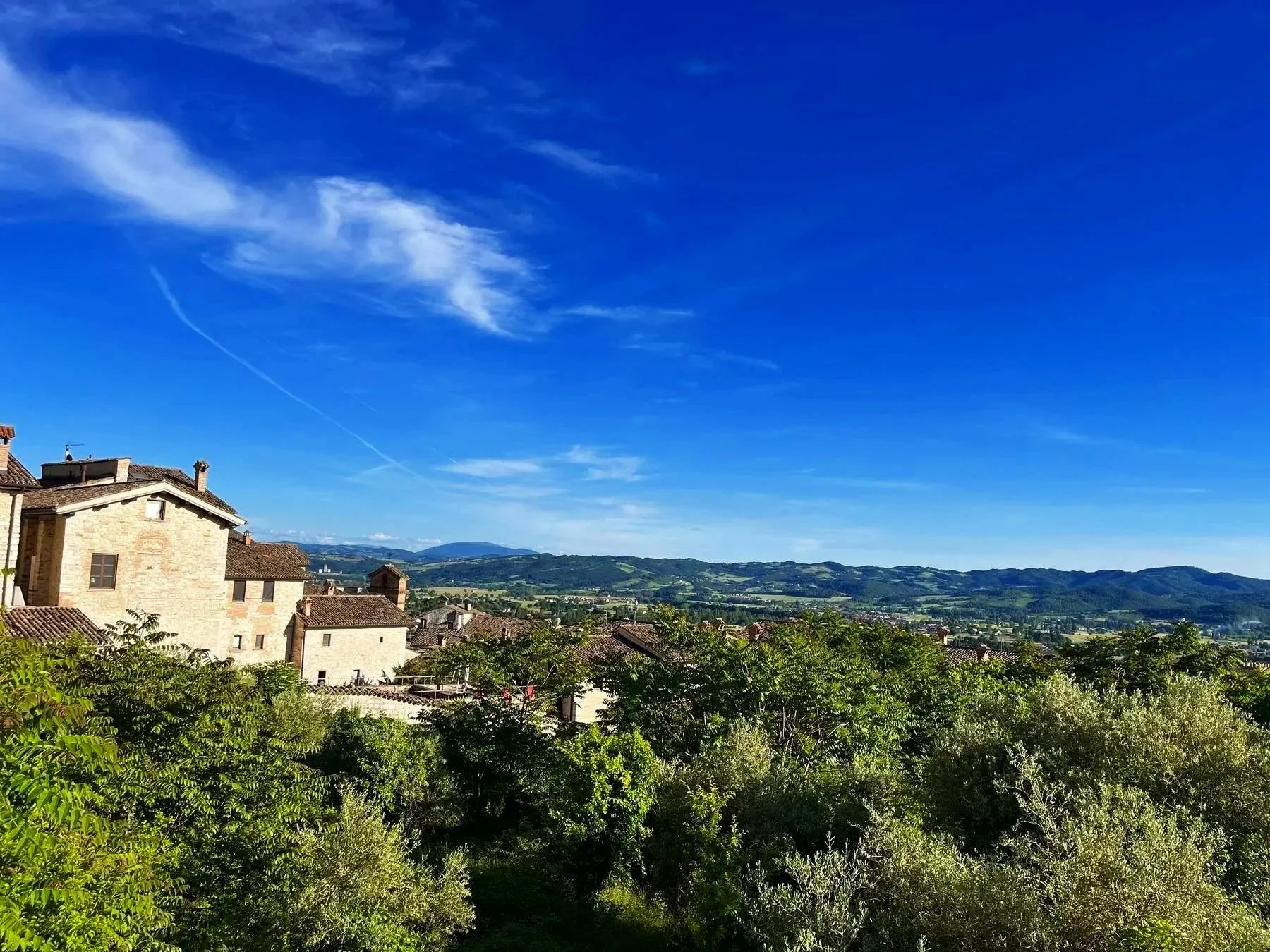
Is Italy Expensive? Only If You Want It to Be. Discover Affordable Italy Travel.
Better Travel, Not Budget Travel
The Myth
One of the myths about traveling in Italy is that it requires a large budget. It doesn't. There is often an inverse relationship in Italy between quality and cost, such that the less expensive options are more relaxing and genuine. Even if you have more to spend, using it will often not bring you a better trip. We provide clients extensive guidance on these questions.
Affordable Italy travel does not mean “budget-travel.” Italy's affordability isn't about cutting corners. It is part of the way everyday Italian life is structured.
It is entirely possible to travel Italy affordably without taping your socks to your undershirt in order to avoid paying for a carry-on bag. We do not advise clients to catch a 5:00 a.m. flight to save $25 or stay in hostel bunkrooms with eight of their newest best friends. And you do not need to restrict yourself to meals of bread and cheese to eat affordably or spend a lot to find lovely lodgings.
How We Help
Traveling Italy affordably is not simply a matter of choosing cheaper options. It requires understanding how travel decisions interact with each other and knowing where to stay, when to go, and how to travel the country so that what is less expensive, and at the same time better, are naturally part of your trip.
This requires familiarity with how Italy actually works.
Our travel planning services are not an added expense. They pay for themselves in the form of better choices and avoided mistakes.
Italy Lodging: Charming, Affordable, Authentic
Lodging in Italy — particularly in the smaller, family-run hotels, guesthouses, and agriturismi (farm-stays) we recommend — is less expensive than comparable US accommodations and more carefully maintained. Travelers can find lodging that is affordable, comfortable, charming, and well-situated.
But if your entire trip is organized around being in the absolute historic center of Italy’s most visited cities and towns—e.g. Rome, Florence, Venice, Amalfi—you will not find very affordable accommodations and/or what you do find will be a high-turnover establishment, perhaps a bit worn around the edges, and catering to mass tourism.
To find accommodations that blend reasonable prices with comfort, character, and beauty, you have to be willing to get outside the dead center of the tourist bubble.
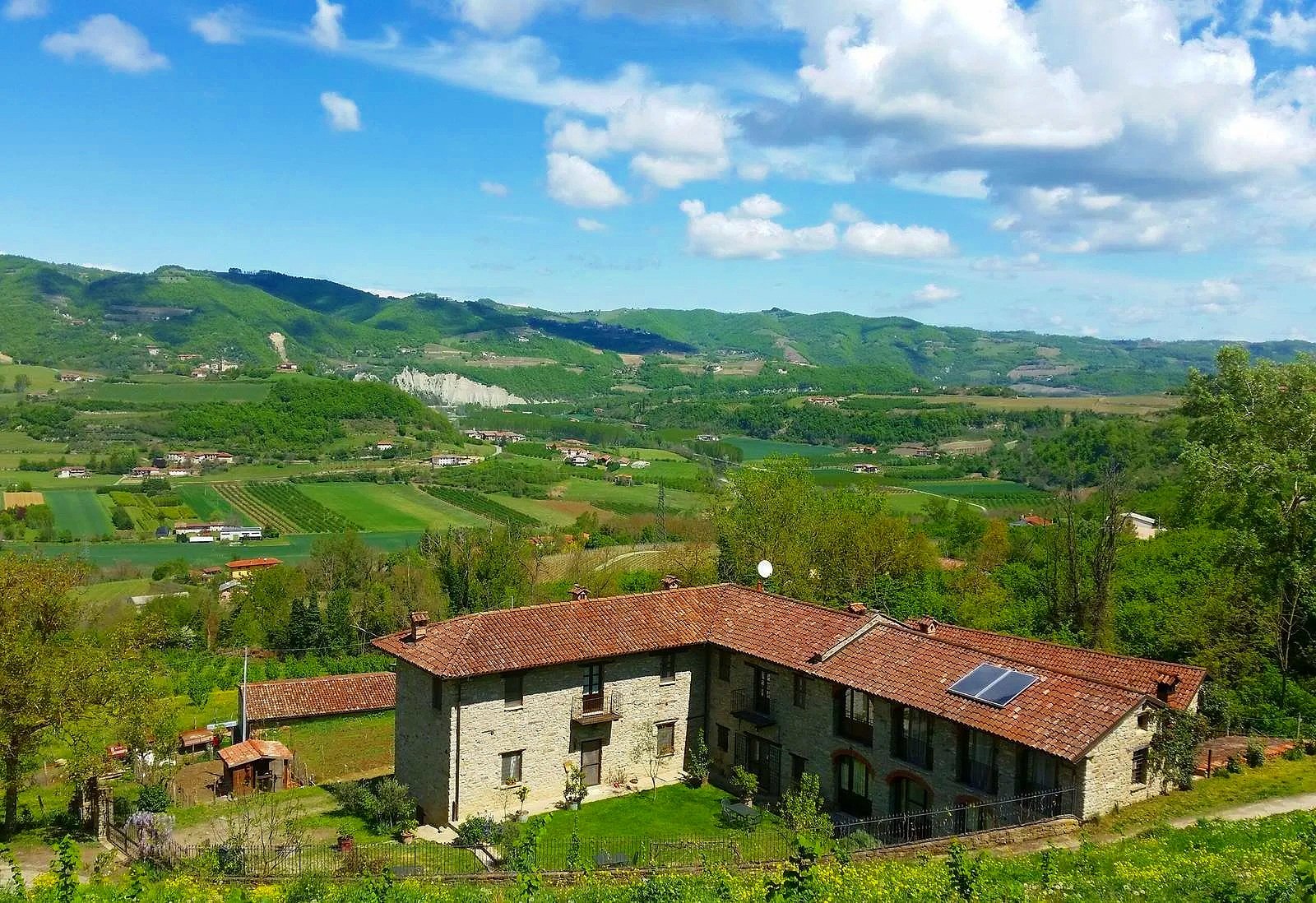
La Luna Buona Agriturismo in Vesime, Alta Langhe
Word of Budget Wisdom: Agriturismo Pricing and the True Cost of Lodging
Many Italian agriturismi (farm stays) offer pre-fixe dinner, but not all, and prices vary widely. Sites like Booking.com usually don't have information about the restaurant's prices and if they do, it's not always accurate.
A farm-stay at $80/night that charges $55 per person for dinner is more expensive than one at $100/night charging $25. Over several nights, those differences become meaningful. If you're a long drive from other options, you're locked into the farm-stay's restaurant, unless you're up for winding, unlit Italian roads at night.
House wine matters too: a place that includes it with dinner or offers it as an $8/liter add-on will run far lower than one selling by the bottle for $30 and up.
When Italy Within Reach helps clients choose lodging, we take all of this into account. Read about our services.
Italy, Where Good Food Is Not a Luxury
Good food in Italy is not expensive, and expensive food in Italy is often not good. A coffee ($1 to 1.50), a fresh sandwich ($3 to $5), a liter of house wine ($7 to $10), a dinner for two ($40 to $50) — all of it is less expensive and of better quality than you are used to.
But if your entire trip is organized around exploring only what is well-known in Italy—for example, Rome’s Spanish Steps—you will only encounter tourist prices. While the food will still be of higher quality than the salt-bomb hotdog you get for $12 at Disney World, you will have spent many times more than you have to.
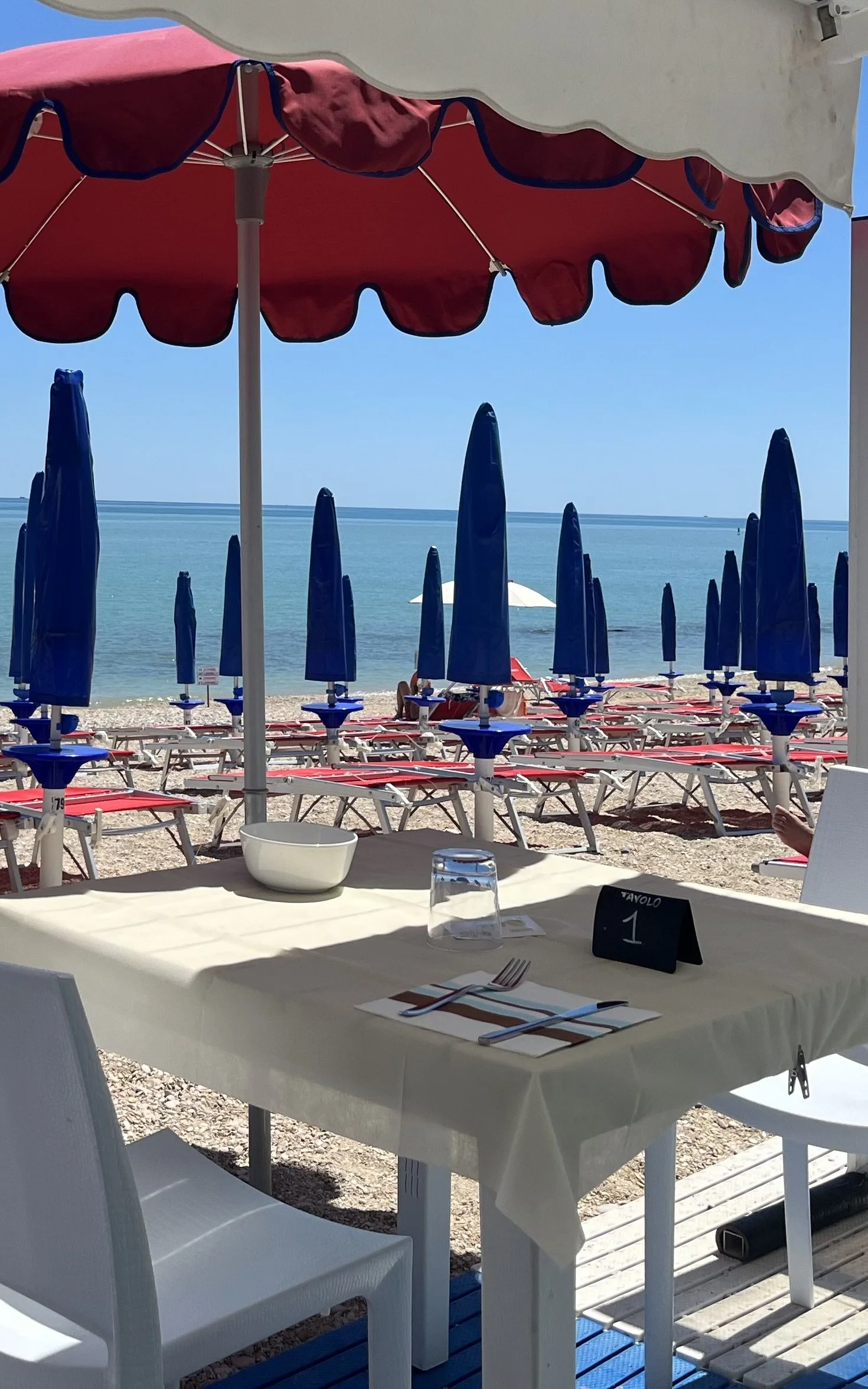
Words of Budget Wisdom: Eating Out in Italy, the “Coperto,” and How to Avoid Unexpected Costs
Nearly every restaurant charges a coperto — a cover charge, usually $2–4 per person, just for sitting down. It's standard practice, not a scam. Think of it as a service fee and a substitute for a tip, which is not standard practice.
If you go to a “bar,” which is what Italians call an establishment that Americans would understand more as a “cafe,” and drink your coffee and eat your cornetto standing at the bar, you will not be charged a coperto. Your breakfast will be very inexpensive, about $3. If you sit down at a table and there is table service, you will be charged a coperto, and your inexpensive breakfast will double in cost.
Depending on the time of year, where you're departing from, and exactly where you’re going, transatlantic fares to Italy frequently match or undercut domestic US flights. Flights to Italy from a New York-area airport, for instance, can regularly be found in the range of $600-$750. If a smaller regional airport without any large, competing hubs nearby is your only option, you may have less of an ability to find inexpensive airfares, but dates of travel and routing can make a substantial impact.
Affordable Italy Airfare: Managing Your Biggest Cost
Words of Budget Wisdom: Arrival Time Matters as Much as Flight Price
If you arrive in Italy at the crack of dawn, you either need to book lodging for the night before and confirm your accommodations will let you check in early in the morning (which is not always possible if it’s an AirBnb) or you need to store your luggage somewhere (also not always possible to do at the place you’re staying) and start sight seeing right away after a long international flight during which you slept poorly, if it all.
Arriving later in the day, even if it involves a stopover, will allow you to go straight to your lodging and rest for awhile. Given that stopover flights are often less expensive, counterintuitively this might be the ideal option in terms of both costs and your wellbeing. At the very least, you should factor in the expense of arriving early when you consider your choice of flight.
Transportation in Italy
Getting around Italy is simply not expensive. Italy's train network is extensive, connecting major cities and many smaller towns at extremely reasonable prices. A train from Rome to Florence — a journey of about 90 minutes on the high-speed rail — can cost as little as $20 to $30 booked in advance. Regional trains reach smaller cities and towns at even lower prices.
Car rentals can also be as little as $10 to $20 a day, giving travelers inexpensive access to rural areas and urban centers not on a rail line, with the added benefit of getting you beyond the crowds. But all car rental companies are not equal and car travel comes with its own costs — highway tolls, fuel, and restricted traffic areas in historic city centers that can result in fines if you're not careful—Italy Within Reach advises you on all these issues so that you don’t encounter unnecessary expenses.
Words of Budget Wisdom: Restricted Traffic (ZTL) Zones — A Wrong Turn That Costs Hundreds
ZTL zones (Zona a Traffico Limitato) restrict unauthorized vehicles from historic city centers, and fines run $100 to $400. The ticket sometimes arrives months later with an added rental car processing fee. Google Maps and Apple Maps often won't warn you before you enter one; they'll route you straight through like any other street. The zones are generally well-signed, usually a red circle on white, but you need to know what to look for ahead of time to avoid the mistake.
Experience Italy Without Overspending
Many of Italy's greatest experiences cost nothing at all. The historic centers of Italian cities and towns — the piazzas, the churches, the markets, the landscape — are simply there to be enjoyed freely.
Major sites — the Colosseum, the Uffizi, the Vatican — do charge entrance fees, but they remain extremely reasonable by international standards. These are extraordinary places to visit, when approached correctly—that is not at 1:00 p.m. in the middle of August.
Words of Budget Wisdom: Skip the Premium, Not the Experience
The "skip the line" tours crowding the internet are costly and unnecessary. Most major sites can be visited without the crowds or the markup if you know when to go and how to book. Guides are worth it for some sites and not others; a truly excellent Vatican guide can run hundreds of dollars. We help clients decide when that's worth it and when it isn't.
We make recommendations based on your interests, not a “bucket list” drawn from a “must see” website or the latest “hidden gem” just made unhidden by an influencer.