Custom Italian Ancestry, Heritage, & Roots Travel Planning
Stand at the intersection of history and biography.
-
When planning a heritage trip, there are two questions that you have to answer:
1) How much do I know about my family’s ancestry?
2) What do I want to experience as I travel their story?
The answers to the two questions inform one another. Even with just a few details about your ancestors—a last name, a region of origin, a village, a birth year—you can plan a heritage trip that is rewarding and helps you understand and feel your family’s past more deeply.
However, your travel will be less “specific.” In other words, unless more research is done ahead of time or “on the ground” when you are in Italy, you will be able to visit your family’s village (assuming it’s still there), but not the street on which they lived. If you don’t know much about your great-grandparents’ social status or occupation, you won’t be able to view the fields in which they labored.
For some heritage travelers, just seeing the village, entering the town church, sampling the local foods, touring with a well-qualified guide is what they want. They don’t—at least as of yet—need more.
Others are looking for a more in-depth experience. They want to see the building in which their great-uncle lived, go to the church in which they know for sure their distant cousins were married, see the shore from which they know the fishing boats that their ancestors worked on departed, look at the 19th-century records held in the regional archive. To do this requires, albeit not necessarily when you start planning your trip, much more detail.
Italy Within Reach works with travelers at all stages of their roots journey. Part of what we do is help heritage travelers understand what is possible based on the information they have and what they want to experience.
-
Step 1: Assemble what you already have
Gather whatever information is available to you at the moment. This may include some or all of the following:
Full names (including spelling variations) of the ancestors who emigrated
Birth, marriage, and death certificates or church records
Immigration or naturalization papers
Ship manifests
Old letters, photographs, or family Bibles with names/dates written in them
Stories or town names remembered by relatives
Step 2: Decide what you want to get out of the trip
The next step is determining what kind of journey will actually feel complete to you. That looks different for different people.
Some people simply want to stand on the street where a grandparent once lived or see the church where an ancestor was baptized.
Others want to go further into the historical record, visiting a comune's civil records office, a diocesan archive, or a small local museum.
Some are looking less for documents than for understanding. A conversation with a local historian can be very meaningful for them.
Step 3: Plan your journey
Once you know what you hope to experience, the practical planning begins.
Depending on your plans, that may include:
Choosing the airports that make the most sense for your ancestral region—not simply the most obvious gateway.
Determining whether a rental car is necessary, or if trains, drivers, or other transportation will better suit your itinerary.
Finding accommodations that provide the best access to your family's town.
Confirming the hours and accessibility of churches, municipal offices, archives, museums, and other places you hope to visit.
Identifying when appointments or advance permission may be required.
Connecting with local historians, genealogists, guides, or other specialists when they can add value to your experience.
Organizing everything into a realistic itinerary that balances heritage exploration with the rest of your time in Italy.
Our role is to help you navigate the practical details so you can focus on what brought you to Italy in the first place.
-
1) We assess what's possible.
We start by reviewing what you already know — names, a town, a date, a family story — and talk through what kind of trip that supports. Some information points to a straightforward visit; other cases need more groundwork first. We tell you honestly which situation you're in.
2) We confirm what we can, and bring in a genealogist when more is needed.
We are historians and sociologists with strong research backgrounds, not genealogists. Where we can help verify or make sense of what you've gathered — a town name that doesn't match current maps, a year of entry to the US that doesn’t make sense — we do. Where the work requires tracing records — birth, marriage, death, immigration documents — that's a distinct discipline, and we refer you to a genealogist for it.
3( We plan the full trip, heritage logistics included. You get everything in our standard trip planning — flights, lodging, ground transportation, food, timing — plus the specific work heritage travel requires: identifying local guides where they'll add real value, checking hours for archives, churches, and small museums, and building your itinerary around access that a standard trip doesn't have to account for.
4) We give you a historical primer. Every heritage trip includes a written account of your family's region and period of emigration — the economic and social conditions, why people left, and what daily life actually looked like. It's built to help you understand not just where your family came from, but the world they left and the one they entered.
Read more about our approach to ancestry tours. And learn about our pricing for heritage travel.
-
Planning a trip to the towns and regions from which your Italian family came is more complex than planning a standard Italy vacation.
The places that matter to you may be off the beaten path, reachable only by car, and with limited services. Some may have shrunk dramatically since your ancestors left or even been abandoned. Streets could be steep and uneven, difficult for those with less mobility. English is likely to be less commonly spoken, particularly in areas with few young people.
You may be interested in visiting small sites—for example, a local mining museum—with restricted visiting hours and whose staff, while extremely knowledge, is not used to showing their collections to American tourists. In these cases, am an expert local guide can make the difference.
Ancestry travel is also emotionally demanding. Arriving in the village your grandparents left after losing five children to disease is not the same as sightseeing in Florence.
Our services handle of these complexities, getting you to the right places in one piece and with the historical depth to make the journey meaningful.
-
Absolutely. Many people do just that. Adding a pure “vacation” element to your travel can actually make the heritage portion of your trip better. Because discovering our family’s past requires something unique of us, making sure you have moments to just relax and take in Italy’s beauty is important.
Descending into the Troubling, Beautiful, Real Italy
What Most Heritage Travel Misses
Most heritage travel providers offers standard vacations with a brief genealogical side trip—focusing on surface-level nostalgia rather than historical depth. Such trips have little to do with what actually happened and offer little insight into why. A luxury “bespoke” vacation to your family’s homeland may bring you to a geographic location relevant to your past, but it will not bring you to a moment in time, nor is it intended to.
What Heritage Travel Should Be
We are experienced travel planners and Ph.D. social scientists whose work is grounded in economic, political, and historical sociology and informed by expertise in labor and immigration history. We bring this knowledge to bear on every heritage trip we design. The past is not always glamorous. It is, as part of human reality, both troubling and beautiful. We help you descend into it.
Heritage Travel Services and Pricing
How It Works
1) Initial Consultation: A free conversation to discuss your family origins and see if our service is the right fit.
2) Historical Verification: We gather the details you know about your family’s history and confirm what we can. We bring on a genealogist, if their expertise is needed.
3) Custom Design: We build your custom itinerary and connect you with local guides as needed.
What We Do, What We Cost
-
The fee for most ancestry itineraries starts at $2,000, but can be less or more depending on the complexity of the project.
We are a completely commission-free firm, and design your trip entirely around what is best for you.
Contact us to learn more.
-
A well-researched account of your family's region and period of emigration — the economic and social conditions, the forces that drove people to leave, and what daily life looked like. Tailored specifically to your family's geography and period.
-
An itinerary built around your family's specific geography and history rather than standard tourist circuits. Where you go, how long you stay, and what you see is shaped by your family's story.
-
Everything included in our standard service — flights, lodging, ground transportation, travel insurance, local life, wine, food, and activities. See our services for full details.
Many heritage and legacy trips involve the whole family, and we specialize in complex, large group travel.
-
If needed, we connect you with a specialist who traces specific family members through birth, marriage, death, and civil records. This is a distinct discipline from historical research and is priced separately.
-
If you would like, we can connect you with local guide who can accompany you on your ancestral days on the ground. Costs vary and are quoted per case.
Understanding the World Your Family Left and the One It Entered
A People, Not a Nation
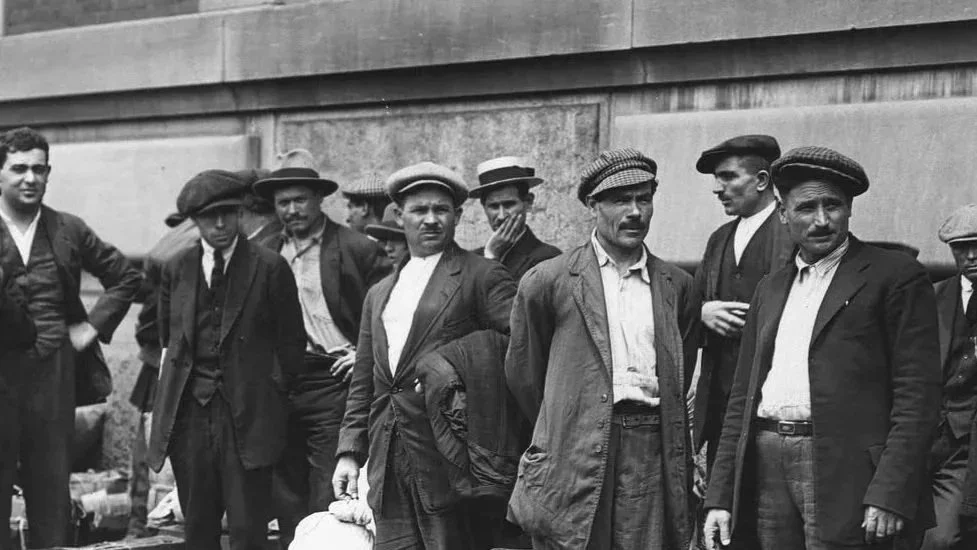
Over 15 million Americans today can trace their heritage back to Italy. Between 1880 and 1924, when the US slammed the door shut on those seeking entry from southern and eastern Europe, more than four million from Europe’s “boot” emigrated to the US. Because of significant regional variations in culture, dialects, and socio-economic conditions, many would not have even thought of themselves as “Italians,” a category imposed on them from the outside.
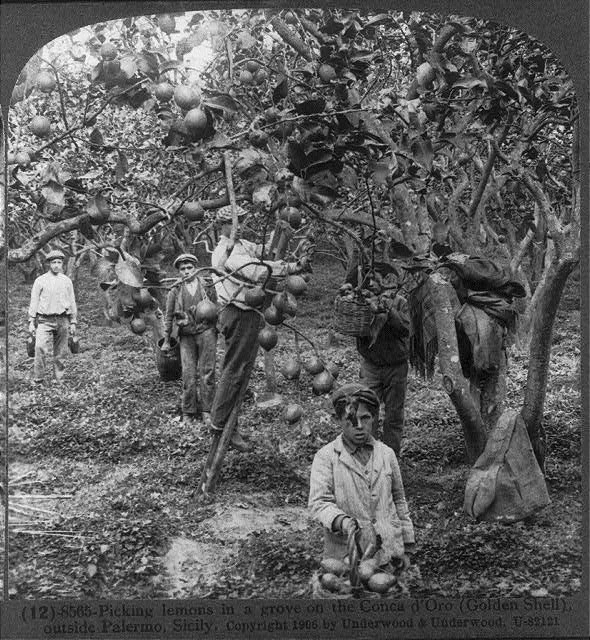
But while a Sicilian and Tuscan may have found each other unintelligible due to linguistic differences, both would have been fleeing varying degrees of poverty and punishing, dangerous labor. These future Americans worked Italy’s sulfur mines, picked tomatoes, quarried marble from mountains, and generally speaking, scraped out a meager existence, more or less severe.
The Italy Only History Can See
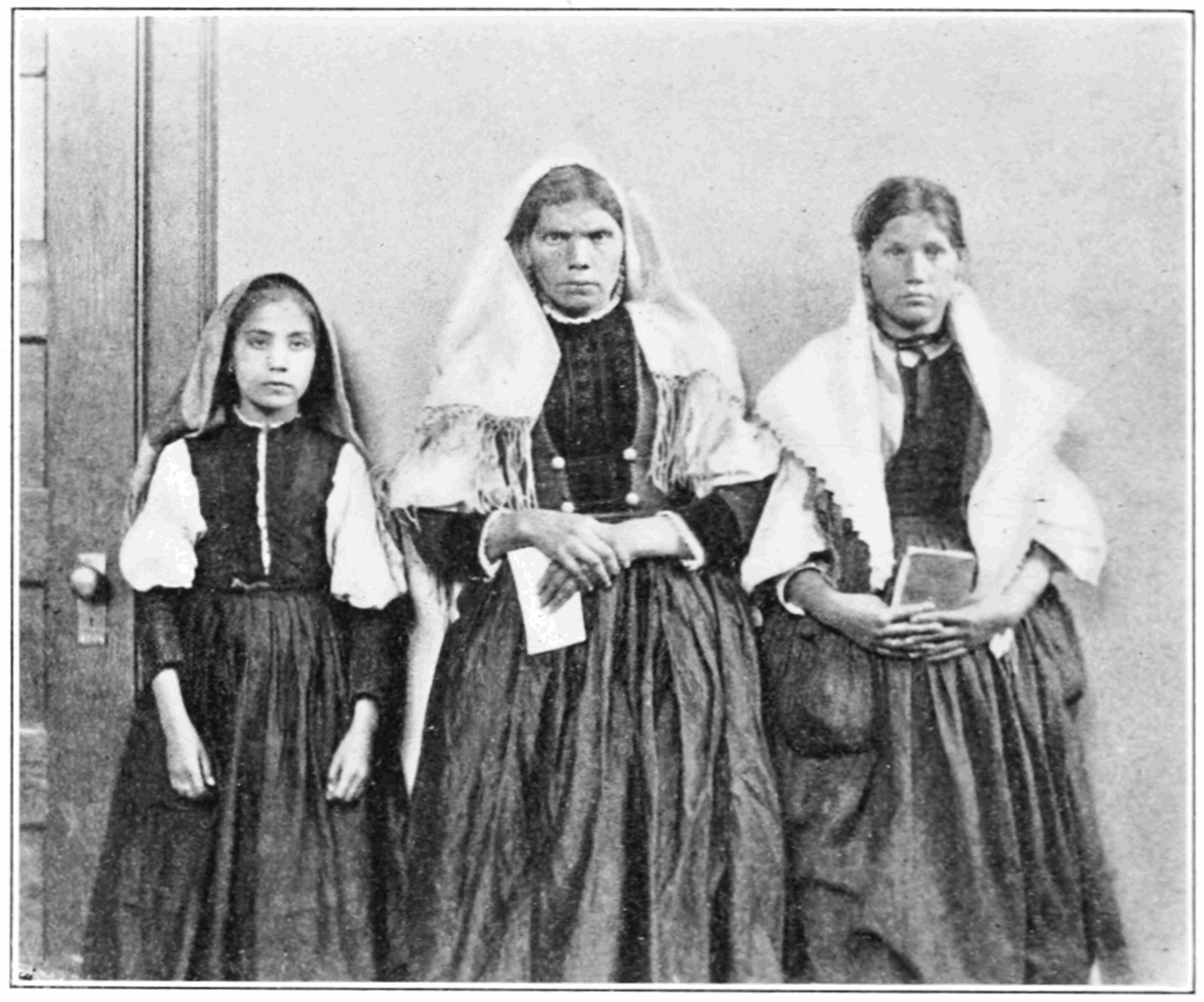
The Italy that we all want to visit today was not the everyday reality for masses of people. The southern parts of the country, from which a large percentage emigrated, were caught in a semi-feudal past, in which large landlords owned vast amounts of property, middlemen who leased their lands extracted massive rents and debt payments from poor peasants, ordinary people were expected to bow and scrape before their betters, and political violence was directed against those who resisted. In the South, most of the rural population was illiterate, a fact that is significant for historians, genealogists, and descendants who are attempting to trace family stories and reconstruct the historical record. Often there is an absence of documents—letters, for instance—not because they were lost, but because they were never written.
While there is a common conception in the US that the country’s Italian migrants overwhelmingly originated in the south, this is not true. As many as 1/3 of those who came to the US were from central and northern regions of Italy—that is around the latitude of Rome and higher. Tuscany, Umbria, Lazio, Piedmont, and Veneto all contributed their share of the US’ Italian immigrants. The reasons they left were often distinctive from their southern cousins. In many cases, skilled craftsmen and artisans, sought after in the American labor market, found new opportunities across the Atlantic. In other instances, agricultural crises, overpopulation, and the absence of plots of lands large enough to secure a living drove people to leave.
“Americans” in Italy
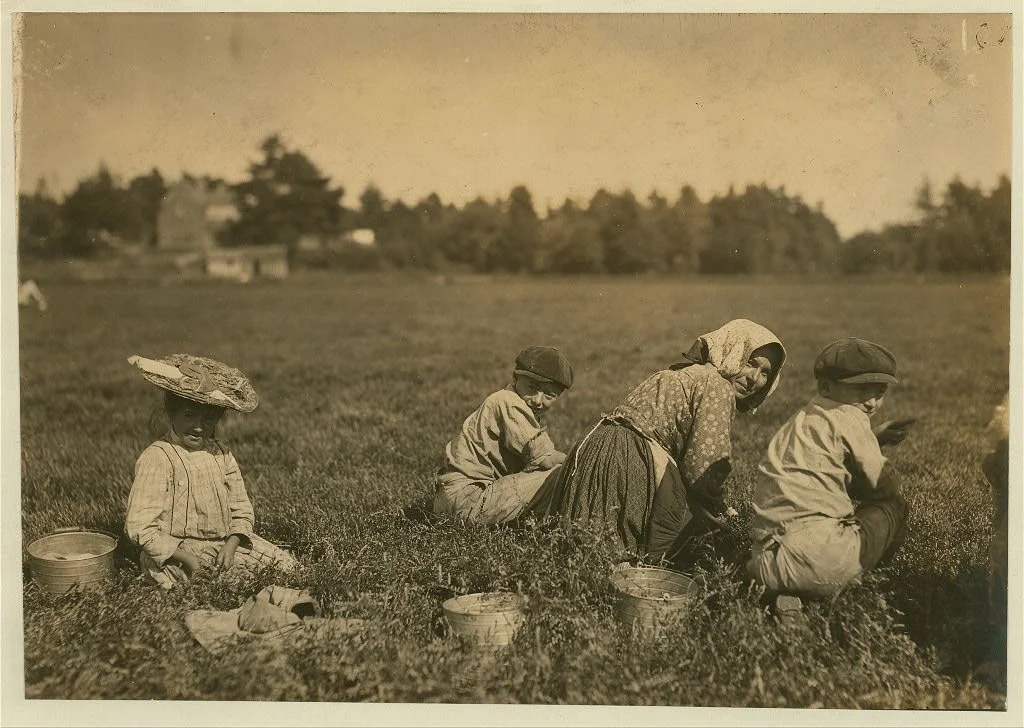
Many, however, went back. Nearly half of all Italian immigrants, “birds of passage,” returned permanently to Italy after coming to the US. Others engaged in circular migration—departing Italy, working in the US, returning to Italy, departing again. Overwhelmingly it was a question of bringing resources home to a family. In other cases, it was a matter of starting a family. Because larger numbers of men emigrated than women, a gender imbalance emerged in the US. In short, finding a wife required going home. Those who returned were known in Italy as “Americans.”
Historians debate whether Italian immigrants who stayed in the US were fully “uprooted”—torn out of their previous worlds and deposited in a new one, with their ties to the older reality largely severed—or “transplanted”—moved to another place but with their traditions and communities intact, albeit changed. Others argue that Italian immigrants had a transnational existence, never fully committing to either world.
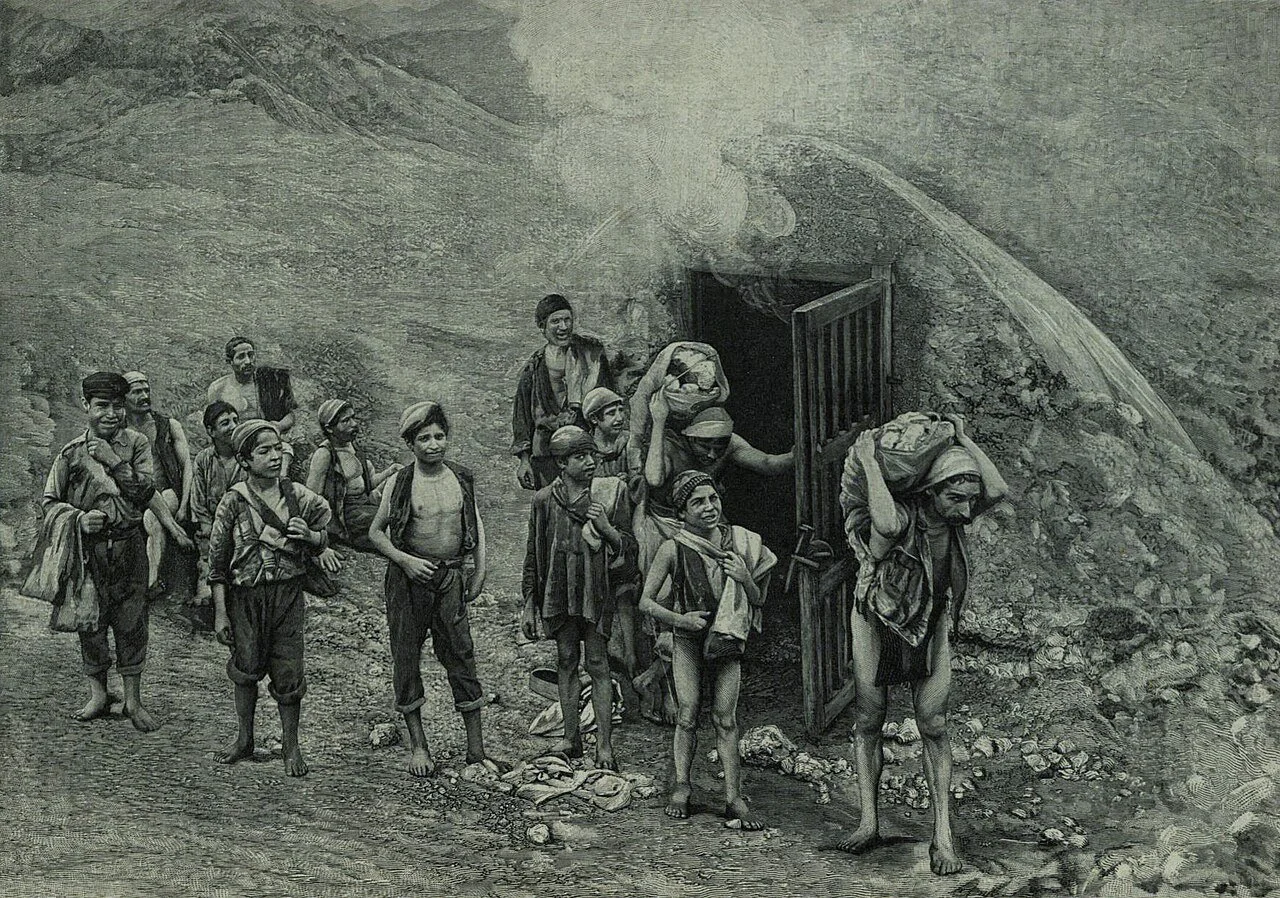
The Intersection of History and Biography
The standard representations of Italian-American culture that find their way into mass media, pop culture, and even sometimes families’ understanding of themselves, capture little of the historical reality and its complexity. They tend to plow over the most compelling parts of the immigrant experience and what followed, explaining neither the Italy people left, nor the America to which they came, nor the intersection of the two. Thus, the TV show The Sopranos never gets much beyond mafia violence and baked ziti. In Lady and the Tramp, two dogs fall in love over a bowl of spaghetti.
The discovery of pasts is fascinating and moving. When people are trying to explore their Italian heritage, they are trying to stand at the intersection of history and biography. This is not easy to do. It takes real knowledge. Italy Within Reach has that knowledge, and it is the core of what it provides with its Italian heritage and legacy travel services.